
Interviews

Interviews,
A Mixtape of Ghosts: Karen Russell in Conversation with Kevin Brockmeier
What the book is most comprehensively about, it seems to me, is human being in conflict with itself—but those words, “human being,” already have a distinct meaning, and it’s separate from what I’m trying to suggest, which is that there’s a part of us that addresses itself to being and a part of us that addresses itself to nonbeing, and in many ways the book is about the tension, the back-and-forth, between those two.

Interviews,
Manipulating and Celebrating Language: A Microinterview with John Sibley Williams
“I suppose a poem being “ready” is a matter of instinct. One could always revise and revise until the heart of the poem stops beating, until the themes get muddied. I stop revising and begin submitting when a poem makes me smile, when something inside me leaps and kicks.”

Interviews,
Smaller Casualties: An Interview with Abby E. Murray
Writing poetry in times of upheaval destabilizes and dismantles, but it also grounds and connects. It frees us. It’s an art that cannot be extracted from its creator.

Interviews,
The Truth of Beauty: An Interview with Erika Sánchez
I feel like I’ve inherited these traumas in some ways. I also think about metaphysical borders and spiritual borders and emotional borders . . . It’s not just the physical Mexican-American border—it’s much more than that.

Interviews,
The Power of Voice in Poetry: A Conversation with Adrian Matejka
When a poem works, you feel it. You don’t feel it in your brain. You feel it in your shoulder blades and in your chest. Sometimes you feel along your arms because there are goosebumps. That’s where the poem settles itself—entirely in the body. It’s going back home. The poem is coming from the body and going back to it.
Interviews,
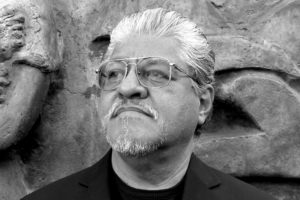
“A Good Story Haunts You”: Exploring the Intersection of Art and Activism with Luis J. Rodriguez
Good stories aren’t just beginning, middle, and ending, and entertaining. That’s fine, those are of value. But a good story haunts you for a while. There’s something in there you want to keep thinking about and maybe go back to that story again. That’s what I think a good writer should do: keep haunting the reader for a while, about what you’re saying, about how or why, so that the reader says, “I can’t just let it go.”

Interviews,
Play and the Spirit of Resistance in Writing: A Conversation with Jamel Brinkley
I like that you can hold an entire short story in your mind, more or less. There may be bits and pieces that you miss, but it’s nice to be able to hold a little narrative in your mind, in your hands.

Interviews,
The Poetics of Witchcraft: An Interview with Faylita Hicks
I want women from all backgrounds to find power in who they are and define how they fit into the world. They are allowed to be upset and angry over the things that have happened to them. HoodWitch is about righteous anger and about taking back the things women have lost.