
Reviews

Reviews,
“Elation and Hollowed-Out Sorrow”: On K.L. Cook’s Marrying Kind
The collection’s novelistic complexity stems primarily from its constant depictions of events, characters, themes, and obsessions from multiple angles. We savor repeated glimpses of characters like Laura, a small-town girl from the Texas Panhandle, or Hartley, a history professor turned dean. We witness these characters’ promising beginnings and violent, unfinished ends: wedding days and honeymoons, heart attacks and domestic violence.

Reviews,
Speaking With Severed Tongues: On “In the Dream House” by Carmen Maria Machado
Machado is so profoundly in control of silence that she has taught it its own language.

Reviews,
Boys Will Be Boys: On Ben Lerner’s “The Topeka School”
The Topeka School is both a culmination and departure for Lerner. While the novel expands on many familiar themes seen throughout his oeuvre—the limitations of language, the blurred line between fact and fiction—The Topeka School moves beyond Lerner’s singular consciousness and into other voices.

Reviews,
The Scamming of the Self: On Jia Tolentino’s “Trick Mirror”
Tolentino turns each topic around like a Rubik’s Cube, looking at it from every side, rearranging possibilities but never quite solving the puzzle. That there is no ultimate solution isn’t a defect of these essays. The inherent ouroboros of logic at work here enhances rather than detracts from the structure and power of Tolentino’s ideas; there may be no satisfactory solutions, but that shouldn’t stop us from contemplating the problems.

Reviews,
Is There Life After Meth? On Tracy Daugherty’s “Leaving the Gay Place”
Brammer . . . was not always an unknown legend. Indeed, as Daugherty points out, the year Brammer’s debut novel was published, 1961, also saw the debuts of Harper Lee’s To Kill a Mockingbird, Joseph Heller’s Catch-22, and Walker Percy’s The Moviegoer—and yet, for many critics, The Gay Place was the most promising of the bunch.

Reviews,
Review: “You Know You Want This: Cat Person and Other Stories”
Roupenian can make the reader incredibly uncomfortable and disgusted and riveted all at once, her prose settling like the memory of a bad dream. While “Cat Person” is, and might always be, Roupenian’s most well known piece, she’s definitely proven with this collection that she is no one-hit wonder.

Reviews,
The City of Houston is a Labyrinth: Bryan Washington’s “Lot”
Washington’s Lot is an entrancing work that explores the perpetual identity crisis that is Houston’s greatest gift and curse; what we get is a smorgasbord of different approaches to being a Houstonian and reconciling that maybe, just maybe, identifying with something, whether it be familia, a space, a history, isn’t enough in this lot in life.
Reviews,
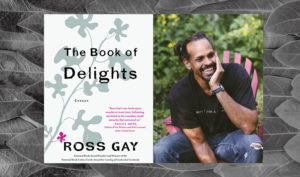
Wakes of Joy: On Ross Gay’s “The Book of Delights”
Gay declares every day an occasion to commemorate, similar to how the sun, when rising, also beams. Delight, he says, “suggests both ‘of light’ and ‘without light.’ And both of them concurrently is what I’m talking about. What I think I’m talking about. Being of and without at once. Or: joy.”