How to Teleport or, Literature and Returning Home
You may have an idea of who a Texan is: someone who wears cowboy boots and hats, lives on a ranch and wrangles cattle, rides a horse to school, loves God, guns, and high school football, and has a big truck with a “Don’t mess with Texas” bumper sticker. You can’t forget the Texas drawl, dropping ‘g’s and talking slow like they got all the time in the world. They know what to do after they hear “The stars at night/Are big and bright.”
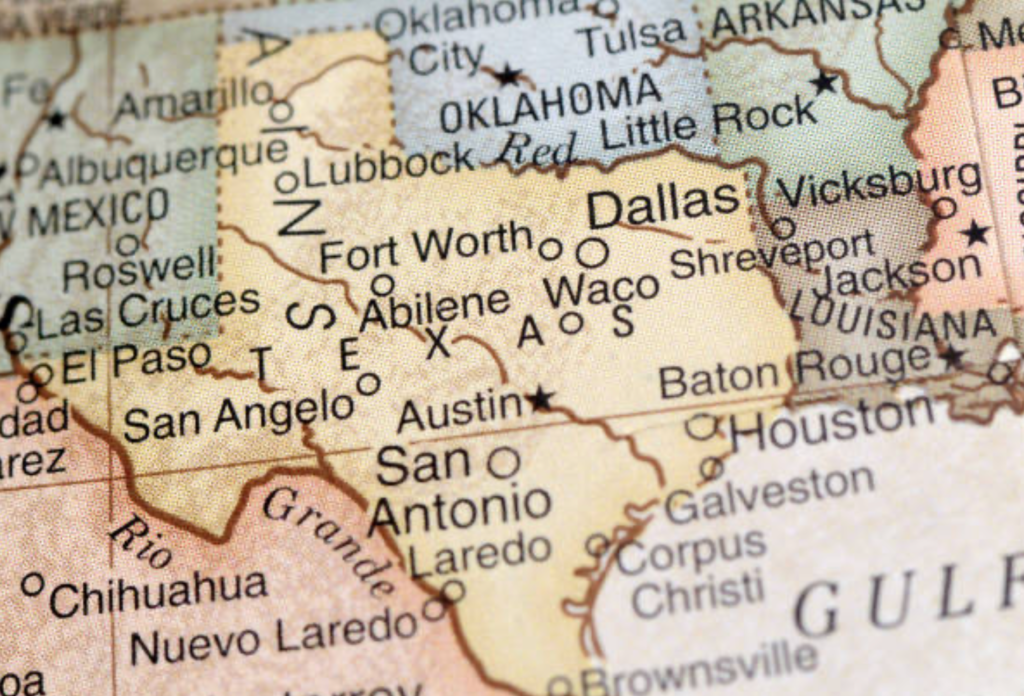
What happens when you’re from the 6th biggest city that people seem to forget is part of Texas? Drive eight hours west from San Antonio, you’ll be in El Paso, the place I call home. You watch oaks and rolling green hills turn into towering rock faces, creosote bushes stubbornly growing out of them; depending on the season, you may even see the nopales fruiting with their bright red prickly pears. It’s an oasis in the desert, though most people just rush through it on I-10 to get to California—or away from it. Sometimes I have the blasphemous thought that maybe we should be part of New Mexico.
Either way, I’ve always considered myself a Texan. I like a good steak, my dad worked on his family’s ranch in Juarez and knew how to butcher any kind of livestock, and I proudly stood to chant the Texas state pledge every school day from 3rd grade into my senior year. On the other hand, I never learned “Deep in the Heart of Texas.” What was the point when I lived on the thumb? I’m not so fond of guns, I drive a little sedan, and about the most Texan my accent gets is when I use “y’all.” I prefer boxing to football, and horror of horrors to many Texans, my father raised me ABC: anyone but (the) Cowboys. I’m a Texans fan, by the way. Moving east to the big urban hubs didn’t bother me none. I was still in Texas!
My first day alone in San Marcos, I realized I was definitely not in El Paso anymore. I had training for work that day and swung by a donut place for breakfast. Donuts are the same around the world, so it wasn’t like I could mess up the order, right?
Before we go on, I need to add: one of the many quirks of living in El Paso is developing a Chihuahuan accent, whether you speak English or Spanish. If you’ve ever heard someone saying “share” instead of “chair,” or “shores” instead of “chores,” that’s the Chihuahuan coming through. And mine certainly did when I went up to order: I’d had one of those “kolash” thingies before back home. Meat and cheese stuffed into bread can never lead you wrong.
I ordered the 2 for $4 special, a strawberry iced donut and a “ham and cheese kolash.” My faux pas was caught by the young woman at the counter, eyes flicking up at me from the register.
“The what?” She asked me to clarify.
“The ham and cheese, please,” I replied. My stomach jerked around, simmering anxiety shooting through the roof. Wasn’t it kolash? It said right there, k-o-l-a-c-h-e. Kolash. That’s how I pronounced it back at home, and no one had ever corrected me. I ponied up for my pastries and an iced tea, scuttling into my car.
‘how to pronounce kolache’ was frantically typed into Google as I crammed the kolash into my mouth. The ham tasted like it came from the giant packs of deli slices from Walmart, the cheese sticky American Kraft singles. I probably could’ve made them at home with Pillsbury crescent rolls, though it wouldn’t be as good as handmade dough.
“Co-lah-chee,” the Google text-to-speech voice chirped. “Co-lah-chee.”
Dammit. Not even one day here, and I was already showing I didn’t belong here. I didn’t feel any better when I found out San Martians pronounce the name of the city as “San Marcus,” totally disregarding the “o” in the name. The “Latin” section in Walmart didn’t have the (El Paso made) Mexicali Rose brand desiccated refried beans. The saint candles my mother taught me to light to keep my home safe were the wrong brand. And to think I’d been excited to come here for graduate school, moving out from my safe bubble of El Paso, near the “big cities” of San Antonio and Austin. Now I was a broken branch of creosote, drowning in the Hill Country rivers of unfamiliarity.
Once I got my new school ID, I headed for the university library, thinking I’d find kinship in Sergio Troncoso, an author from El Paso. He’s my mother’s age and they went to school around the same time. I found The Last Tortilla and Other Stories on the Alkek Library shelves and snatched it up, then grabbed From This Wicked Patch of Dust for good measure. I didn’t bother reading the majority of the stories, turning to “My Life in the City,” Troncoso’s reminiscence on living in New York City, thinking he too would discuss the ache for home, being surrounded by the steel and glass skyscrapers of the big city, which dwarf the Wells Fargo Plaza (once the tallest building in downtown El Paso).
I was let down. This is not Troncoso’s fault—it is my own. He found charms to living in NYC, but he lived there for years according to “My Life in the City.” I’d been in San Marcos as many weeks as I could count on one hand. He had friends, while I was all alone. I set the book aside for a bit after my disappointment, before picking it up on a particularly lonely Saturday after calling my mom.
The muggy San Marcos morning melted into a hot, dry El Paso evening. Troncoso named streets I could see in my mind’s eye, places I’d driven and been driven down by my parents. I rolled down Carl Longuemare, Alameda, and Paisano again; passed Sacred Heart Church, which you see on the Oregon exit to get to UTEP. I grabbed From This Wicked Patch of Dust, finding home again.
Pilar, one of the main characters, warns her daughter not to take her brothers into the canal: “It’s full of spiders and frogs and snakes and niños de la tierra. If one bites you, you will die.” (6) Later on, she watches a biplane buzz down towards the cotton fields, driving to the Big 8 on Alameda. I lived in Socorro, ten minutes from Ysleta. For much of my childhood, I was surrounded by fields, sorghum and cotton; my parents had water rights for irrigating the pecan trees on our property. I was back in my childhood bedroom for a moment again, woken up by the buzzing of the biplane and the rattle of the chain link gate to the Daughtery Lateral canal, my late father going to open the lock for us to get our irrigation water. The Big 8 on Alameda, now a Food King, only recently got new carpet—but it still has the same musty scent I’ve known all my life when you walk into it.
Later in “Wicked Patch”, Ismael goes to New Jersey after winning the Gannett scholarship for the Blair Summer School for Journalism. Of this experience, he says, “The kids…spoke much better than I do. I don’t know; I felt like I didn’t belong. Like a stupid Mexican.” Those last four words made me flinch. How many times had I put myself down since arriving with those same words?
The final story, “Lost in the Desert,” is set in December 2005. Ismael’s brother Marcos is killed in action. I had family serving in the Army; each morning and night was tainted with the fear there would be a call they were KIA. As I read on, an exchange between Ismael and Pilar opened the floodgates:
“Mamá, I wrote a story. It’s about our family, Mamá. A family from Ysleta.”
“A story? Mayello, I have always been proud of you, you know that … I don’t…understand many of the English words you use” (227).
I wondered how many times Troncoso had this conversation with his mother—it was one I’d had nearly word for word with my mother. She’s proud of me and has always encouraged my writing. I mean, she said she knew I’d be an author at just three years old. That wasn’t just a mother’s wish, but real intuition into who I was. She would read my stories and compliment me on how well I wrote, but as I got older and my vocabulary expanded, she admitted it was difficult to read sometimes because I was using such sesquipedalian language. (Sorry Mom. I promise I’ll explain that word when I get home for Christmas!) My father had nicknamed me “Webster,” after the dictionary; he would ask me to explain a word he encountered in news articles for him. It made me miss them terribly, and I can only hug one of them these days.
I bought a train ticket home for Christmas soon after, and I’m excited to ride down those roads once more. I’ll tell my mom about what I’m writing, and she’ll nod and praise me. I won’t get too far into it, so she doesn’t feel like she’s failing to understand me.
I wonder how much I’ll miss San Marcos while I’m back “home,” no longer surrounded by the peace and quiet of my apartment complex, or wishing I could take a nap in the middle of the day with no one interrupting me to see what I’m doing or if I’m busy, or waiting to get back so I can cook whatever I feel like, rather than remembering I have to cater to the tastes of my mother and brother too.
And maybe I’ll realize this place is a little bit home, too.