
Patterns of Power: A Conversation with Clark Finalist Laila Lalami
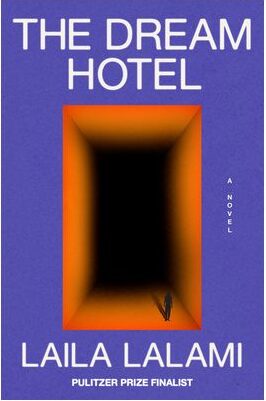
Paige: Much of the conflict in The Dream Hotel stems from an unholy alliance between government (the “RAA”) and corporations (“OmniCloud”, “Safe-X”). You have written that what’s depicted in The Dream Hotel– specifically detainments based on algorithmically predicted “pre-crime”– is not dystopic, but a “part of our present and our past.” Can you elaborate on the connections between The Dream Hotel’s reality and our own?
Laila: “Pre-crime” has a long and well-documented history. In the United States, for example, more than 120,000 Japanese people and Japanese Americans were interned in concentration camps between 1942 and 1945 on the suspicion that they might in the future serve as spies for Japan or commit acts of sabotage. The people who were detained included infants and toddlers– a category of people that no one could reasonably suspect of planning to commit acts of espionage or sabotage. Government agents went into orphanages and removed Japanese infants and toddlers, and placed them in internment camps. Another example comes from the Wayward Minors laws, which were passed in the 1920s with the intention of preventing children and teenagers from becoming criminals. A young person might be found inebriated or wandering in the park late at night and thus be labeled a wayward minor. They were taken into reformatories, where they worked and lived under horrible conditions for up to three years. The irony is that some of the crimes they were being prevented from committing (for example, prostitution) had sentences that were far shorter than the three years spent in those institutions.
Paige: One of the masterful elements of this novel is the use of empty, affectless bureaucratic language (in the form of memos, press releases, meeting minutes, portions of a corporate handbook, etc.). Are we so embroiled in “corpo-speak” that we all speak it fluently, or did you find inspiration elsewhere?
Laila: All systems of human control require bureaucracy. This is true of brutal projects like colonial rule, mass incarceration, or war, but also of social programs like medical care or education. I wanted the book to include archival materials that show how a person can be turned into masses of data without ever getting us closer to understanding who she is. So I taught myself to pay attention to all the forms, minutes, bills, schedules, and other bureaucratic material and used some of it for inspiration.
Paige: The central conflict in the novel is Sara’s determination to maintain her own identity in spite of the (mostly false) narratives constructed about her by others. In the world of The Dream Hotel, narrative itself has become a form of oppression. Can you share a bit about the process of crafting Sara’s point of view within that context?
Laila: Writing a novel about surveillance is a big challenge. I chose the third-person limited point of view for Sara because I wanted to reinforce the feeling that she is being watched at all times, but I also wanted to get deeper into her emotions, so I often used free indirect.
style. The present tense is another strategy to bring the reader closer to Sara’s thinking in the moment. And finally, the formal choices I made—that is, the inclusion of archival materials—also fit well within a third-person narrative.
Paige: The Dream Hotel often references the fact that data-gathering projects throughout history have been used for ends– both progressive (the WPA) and regressive (colonial oppression). Do you feel that data-collection is inherently neutral, or is it always ultimately an instrument of oppression?
Laila: As human beings, we are naturally wired to seek out patterns. We look at disparate events or facts and try to find a connecting thread between them. So I think the urge to collect data comes naturally to us in many spheres of our lives. If you’re a pastry chef, you might keep track of what type of flour you use with different pastries in order to figure out which one yields the best results. Data collection is therefore just an instrument. The problem is that many human beings also have tendencies to seek out power, so the creation of large databases is hugely tempting to people who want to commodify the data, or use it for political influence, or to deprive others of basic rights like the freedom of movement. We live in a world where many things are true at once.